Tuesday, June 9, 2009

Spanish Omelette

Chapter 27

Spanish Omelette(Click to enlarge)

La Tortilla Española

Although this is not a recipe blog I do like to occasionally show how to prepare the dishes which I learned to love after arriving in Spain. I was introduced to several by the Bowden family's Mallorquin cook, Catalina, and by Helen who showed me how she cooked Spanish style in her tiny kitchen.
Many times when we went on outings in the Citröen, whirring and jouncing across back country roads, we had a tortilla packed somewhere in a picnic basket, along with some nisperos (loquats), sobrasada, Inca biscuits and a bottle of wine.

The Spanish potato, egg and onion omelette is such a popular addition to a summer meal, or as a picnic item, since it holds up well being transported in warm weather. It's also common as a tapa, being served with a slice or two of crusty baguette bread and a small glass of vino.

Here's how I make it:

Spanish Omelette

Ingredients for 4 servings:
3 medium potatoes
3 large eggs
1 onion
salt 1/2 teasp & pepper to taste
olive oil
Italian parsley, chopped (optional)

I use a 7-inch non-stick pan as it's easy to fill, making a nice high and rounded tortilla which is easy to flip over.

1. Slice potatoes lengthwise once, then slice both pieces thinly into half moons. Chop onions into 1/4 rings.

2. Coat the bottom of the pan with oil and when hot add potatoes. Keep turning so they do not burn or go brown.
When golden, remove from pan and set aside in large bowl.

NOTE: Some folks prefer to gently boil or steam the potatoes for 5 - 10 minutes rather than fry them. I've seen it done both ways and I also like to do this.

3. Put chopped onion in pan, if necessary add a little more oil and sauté until soft, without being dark brown. Remove from pan and add to potatoes in bowl.

4. Beat the eggs in a small bowl, add salt & pepper and chopped parsley, and pour over potato & onion mixture in bowl. Turn gently to coat all.

5. Add 2 TBS oil to pan and when hot, pour in the egg, potato and onion mixture. Run the edge of a sharp knife or spatula around the rim of the pan while the egg is
setting to loosen the edges. I also poke it several times in the middle to let some of the runny egg seep down to the pan. Don't let it get too dark or burn.

6. When the edges are set and the middle is still half runny hold a plate over the top and flip pan and all over on to the plate and gently slide it back into the pan.
Don't overcook as the centre should still be juicy.

7. Let cook a minute or two more on that side, then slide it out onto a plate.

8. Cut into wedges as a luncheon dish, or into small squares with toothpicks to be served on a buffet or as a tapa. Or keep it whole to take on a picnic.

The edges should be fat and firmly rounded. If you've never tried making one before, start with a small non-stick pan and when you're an expert move up to a larger pan. A small 7 inch pan will make a nice luncheon omelette for two.

whole omelette
Once you've made a tortilla and have mastered the knack of flipping it over, I'm sure you will find it a welcome addition to your picnics, luncheons or tapas menus.
I hope you like it!

tortilla for oneTortilla for One

Continue on to Chapter 28 Spindrift
Go back to Chapter 26 Driving the Island

Wednesday, May 27, 2009

Driving the Island

Chapter 26


Driving around Mallorca with Mr. G and Helen was a great treat on weekends when we would climb into the Citroën deux chevaux and join the other domingueros ....Sunday drivers...for excursions around the island. There were so many wonderful places to discover and so many little villages with restaurants that served delicious Mallorcan country cuisine. Other times we would pack a picnic lunch of tortilla, sobrasada, baguettes, cheese, olives and wine.


Mallorcan Sobrasada Sausage
Photo courtesy of gastrotourspain

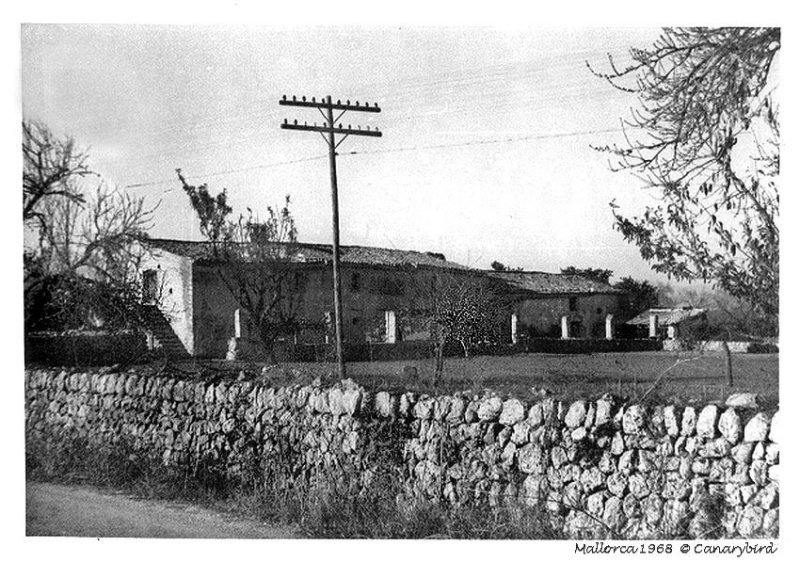
farmhouse from road(click photos to enlarge)

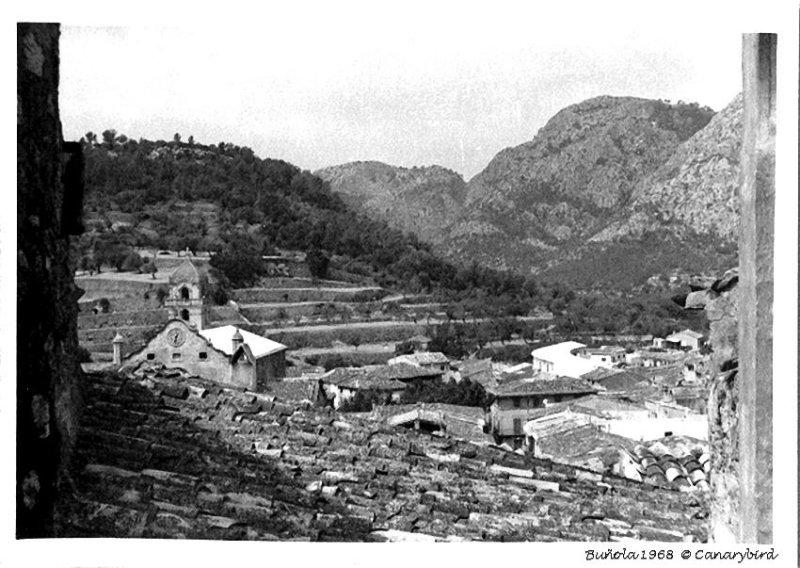
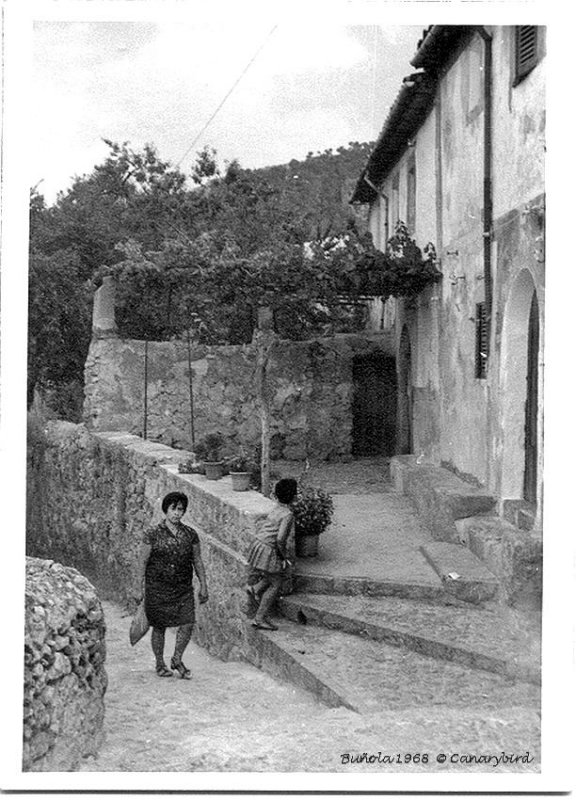
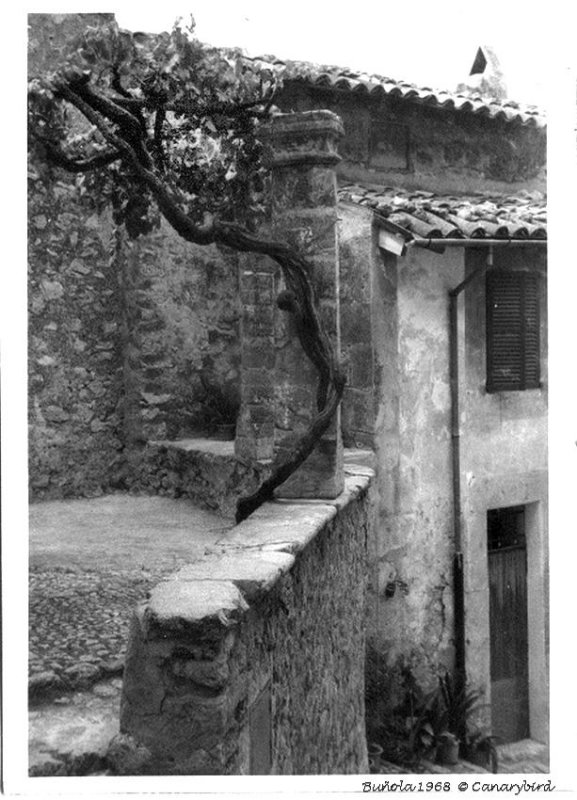
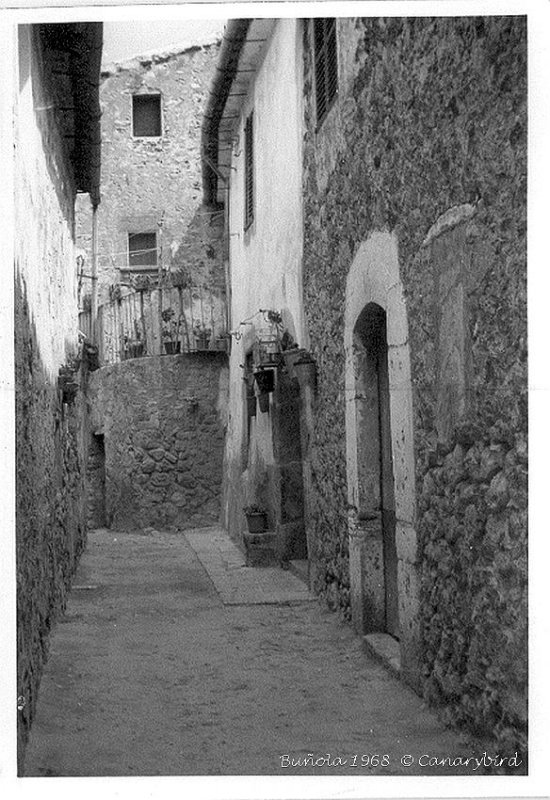
I had a little German Voigtländer 35mm camera at the time and as I couldn't afford colour film (thank heavens, I say now) I limited myself then to black and white photography, which now has a nostalgic appeal. One of the villages we visited was Bunyola, situated at about 14 kms from Palma, in the Sierra Tramuntana mountains. The name of the town used to be spelled in Castellano as Buñola (as on my photos) but it is written nowadays the Mallorquin way as Bunyola.

panorama bunyolaHere are some photos I took as we walked through Bunyola in 1968.

doorway
Bunyola woman & child
bunyola 3
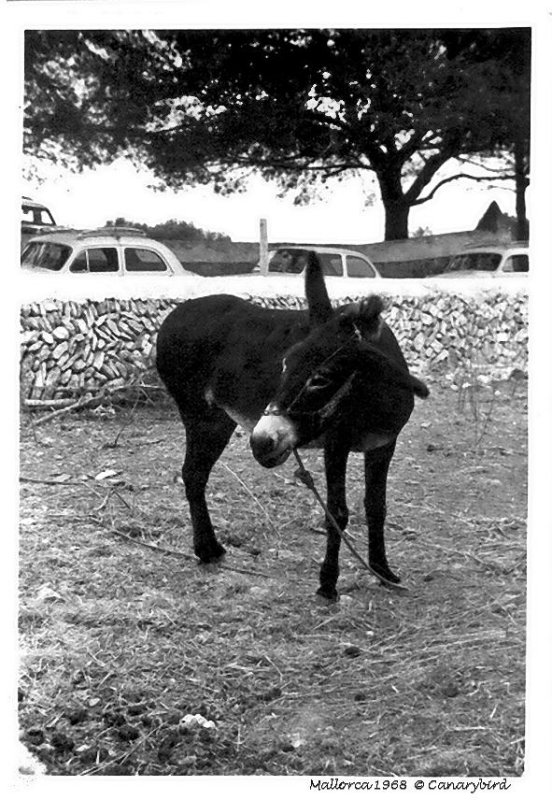
Bunyola 4 Sometimes we would go to a beach where we would pass by a farmyard. Here George Bowden greets a friendly burro.
G.Bowden & burro Oh where did he go?
burroHere's a view of a Mallorcan vineyard.
Image courtesy of Mallorca Wine Express:


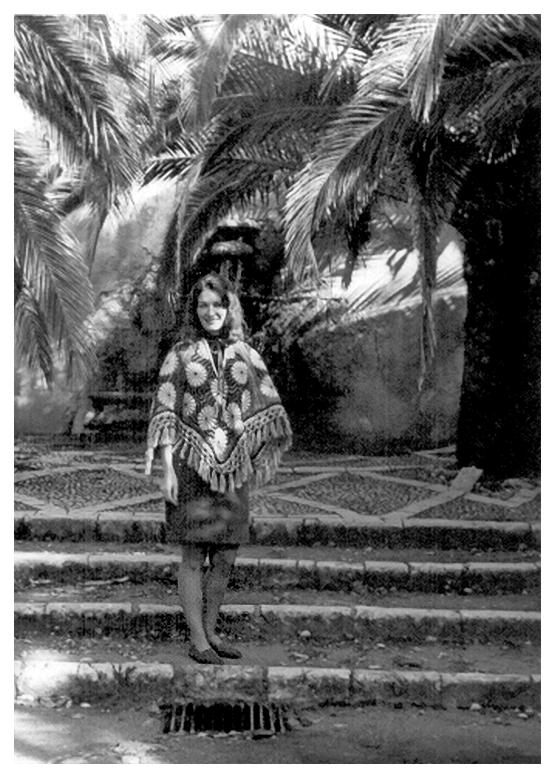
Here I am standing in the Gardens of Alfabia on another outing:
Sharon in Alfabia I bought that poncho when I arrived and wore it everywhere. I didn't bring an overcoat as I thought it was never chilly in Spain!

Continue on to Chapter 27 Spanish Omelette

Go back to Chapter 25......Sopas Mallorquinas

Wednesday, May 20, 2009

Sopas Mallorquinas

Chapter 25

sopas mallorquinas (click to enlarge)

Sopas Mallorquinas - Vegetable and bread stew from Mallorca

This is a much loved hearty meatless peasant dish from the Balearic island of Mallorca. Although called 'sopas' or soup, it is actually a stew-like combination of available winter vegetables such as chard, cabbage and cauliflower cooked in water, oil, garlic, paprika and salt, which is then poured over thinly-shaven slices of dry salt-free country bread - called sopas - which are a day or two old. These thin bread slices are available in nearly every corner 'colmado' - as the small neighbourhood grocery stores are called. Those who have grown up with sopas Mallorquinas on the table will probably look forward to having it many times more. You can prepare this dish and have it ready in less than an hour.

Ingredients for 4 persons:

1/2 lb (200 grams) of thinly shaven slices of country bread
A dense country-style bread is needed for this and it should be stale, dry and sliced paper thin.

approx. 8 young leaves & stems of Swiss chard roughly chopped
small cabbage - roughly chopped
1 onion cut in julienne
handful of flatleaf Italian parsley roughly chopped
cauliflower - a few florets broken in pieces
1 ripe tomato, peeled and diced
2 teasp sweet paprika powder
4 TBS olive oil
2 green peppers - cut in large dice
2 to 3 cups water
optional: chicken stock cube
salt
fresh ground black pepper
4 cloves of garlic, peeled and crushed

1) Put the oil in a shallow flame-proof earthenware or ceramic casserole. When oil is hot, add the onion, green pepper and garlic. Sauté without browning.

2) Add the tomato and the large diced vegetables. Sweat the vegetables and blend in the paprika powder. Season with salt & fresh ground pepper.

3) Add the water and let simmer gently for about 15 - 20 minutes, then taste to check seasoning. (Note: After pouring in the water I added a Knorr or Spanish Avecrem chicken stock cube, broken up and scattered over top.)

4) Once vegetables are tender, turn off stove, remove them from the pot with a slotted spoon and transfer them to a warm bowl, leaving the broth in the casserole dish. There should be about an inch of broth.

5) Arrange the thin shaven slices of dry bread over the bottom of the casserole dish so the broth is totally absorbed, and put the vegetables back in the casserole on top of the bread. Let rest for at least 15 minutes before serving at the table.

6) Serve at the table in the same earthenware casserole dish.

NOTES: The bread used in this recipe is typical to Mallorca and is a simple bread made of unbleached partially whole wheat flour, water and yeast. It is therefore dense and able to absorb the broth without becoming mushy.

There are many variations of 'sopas mallorquinas' as the ingredients depend on what is available in the garden at the time. However those listed above are the main ones used and will give the true flavour of this dish.

Continue on to Chapter 26......Driving the Island

Go back to Chapter 24......Cayetano, The Gypsy

Tuesday, May 12, 2009

Cayetano, The Gypsy

Chapter 24

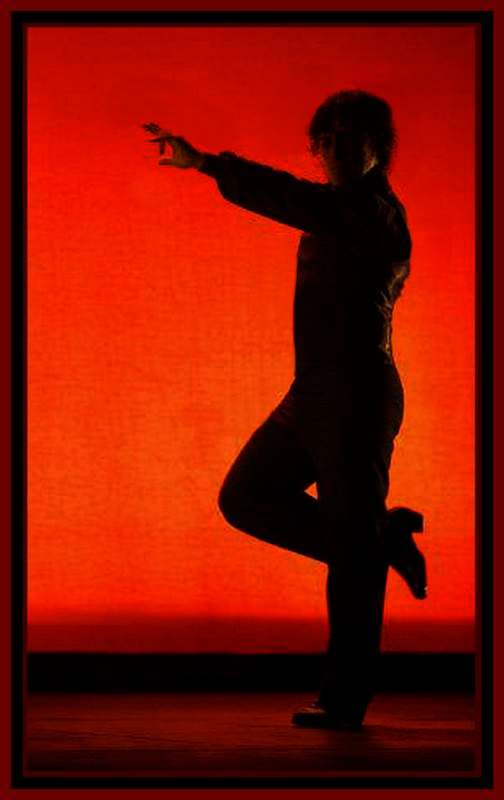
gypsy danceImage adapted from:DeFlamenco.com
(Click to enlarge photos)

Cayetano was a flamenco guitar player ....de raza gitana....of gypsy race...who was a good friend of Mr. George Bowden and his family.
Cayetano performed some evenings at The Guitar Centre in Palma and although he wasn't the best of flamenco guitarists, he could be counted on to arrive and perform on time. Tall, slim and with collar-length black hair, he had the strong facial features of his race. With his black eyes and swarthy skin his appearance attracted admiring glances, and when he appeared in his black suit with white shirt open at the neck, his hair slicked down with brilliantine, he looked all the part of a flamenco guitar player....de raza gitana.

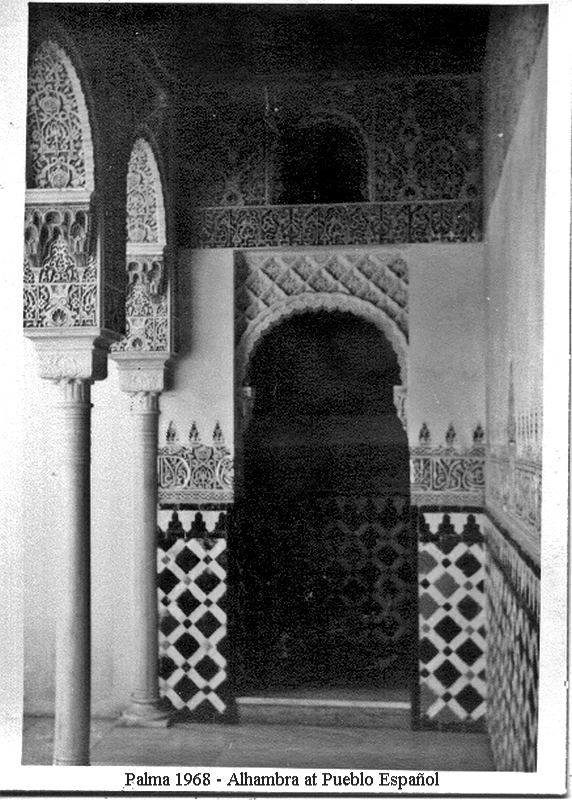
alhambra-Palma He sold bolts of cloth in the market and was married with young children. He was quite poor and often didn't manage to have enough to eat. I remember one time when Cayetano and José Cobos, another flamenco guitarist, were up at the apartment with Mr. G. and Helen after a performance, Cayetano mentioned that he hadn't eaten in two days. Without a hesitation, Helen went to the kitchen and in no time prepared him a meal of hamburger patties, peas and chips. He was very hungry and ate quickly.

G.BowdenGeorge Bowden with one of his guitars

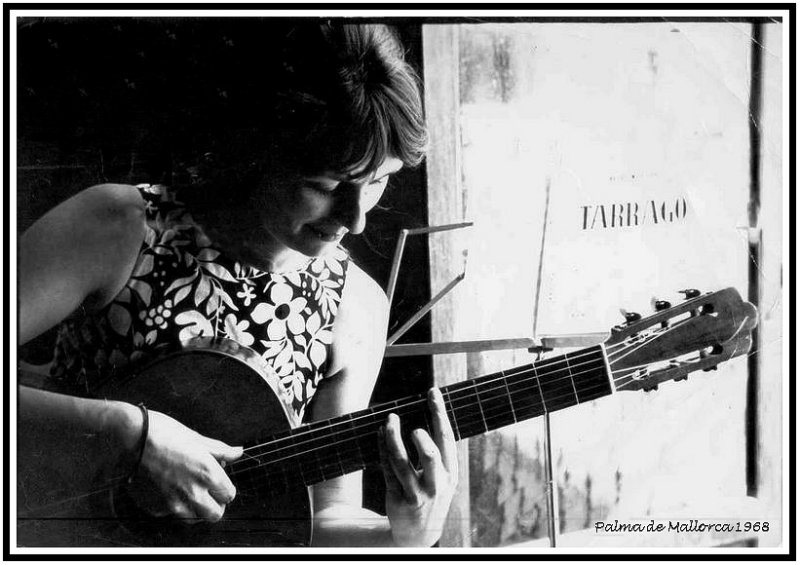
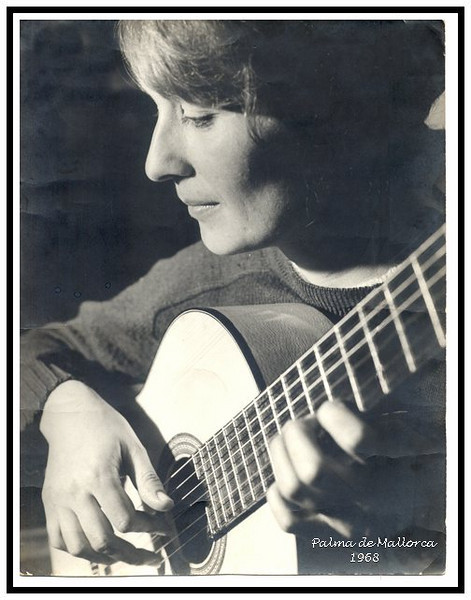
While I was teaching guitar at the Guitar Centre I was for a time also trying out a flamenco guitar
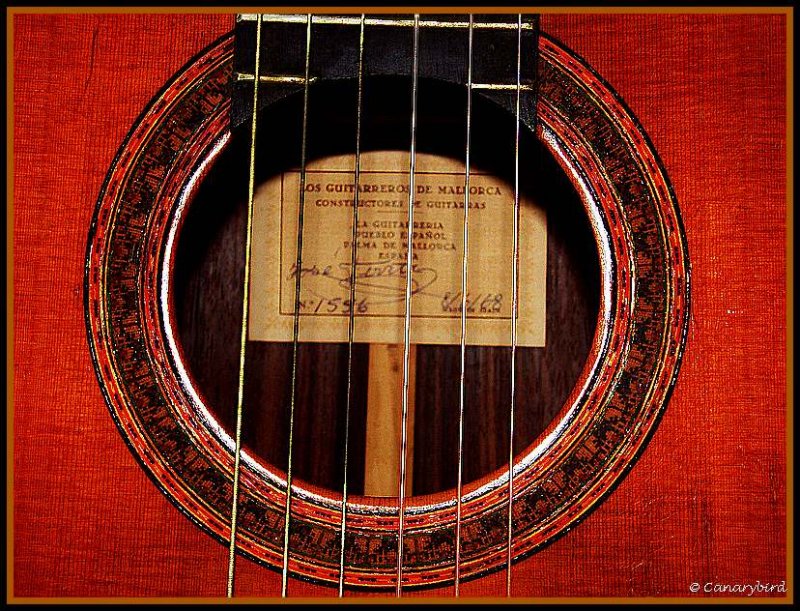
loaned to me by Mr. George Bowden, from his factory in the Pueblo Español. Flamenco models have a lighter construction and thinner body in order to give the brilliant sound needed for flamenco playing, as opposed to the deeper, more mellow sound of the classical guitar.
Mr. G. would sometimes take one of his flamenco guitars to Cayetano and ask him to try it out for sound.

Guitar centreAt the Palma Guitar Centre Studio

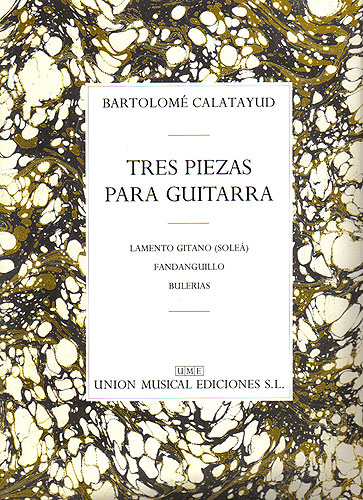
I never really learned how to play flamenco properly and I believe the rhythms and melodies are instilled as a heritage from early childhood. But I had been practising a few simple versions of Soleares and Bulerias shown me by Bill Lewis when I lived in Vancouver. The music had been arranged by the maestro Bartolomé Calatayud, the beloved Mallorquin guitarist, composer and teacher.

music bookI was very much attracted to the sounds and rhythms of flamenco and when I met Cayetano we agreed that he would give me a few lessons. He came to the makeshift music studio in the guitar centre that I had been using, where an internal door led to the small one room home of Jeremy, the scuba diving instructor.

As I mentioned earlier, Jeremy would sometimes appear in the middle of a lesson with his flippers, tanks and diving gear to disappear into his cubbyhole residence. I enjoyed learning from Cayetano although at that point in time I could barely speak Spanish. I communicated with my own Spanish pupils by hand gestures and the few words I had written down which covered the parts of the guitar and basic instructions.

guitar labelSo I was very pleased when, one day after I had taken a few lessons from Cayetano he got up from his chair and started to dance to my playing. Oh yes that was thrilling, although I was hardly able to keep up with him, he paid me the compliment of affecting that with my attempts at playing Bulerias I could stir his gypsy temperament into dancing.
Dear Cayetano, I hope life has been good to you since then.

Here is an amazing video of a little gypsy girl dancing Bulerías to the sound of many olés and with all the spirit of a grown woman.


And here is another video of Bulerías danced in an authentic setting:


Continue on to Chapter 25......Sopas Mallorquinas

Go back to Chapter 23......A Night in Tagomago

Wednesday, April 29, 2009

A Night in Tagomago

Chapter 23

club scene This is a photo collage. (click photos to enlarge)

Loli and I were still working as extras in the movie being made in Palma de Mallorca.

movie cameraOne evening we were taken to a popular nightclub called Tagomago, which was run by Los Valldemosa, a musical group at the time consisting of three young Mallorquin men, Rafael, Bernat, Tomeu and a pretty blonde American girl, Genia.

GeniaThe men were from the village of Valldemosa, a lovely place in the mountains where Chopin and his mistress, George Sand (her pen name) spent a rather chilly winter in the monastery, la cartuja, years ago. The group was popular in the Balearic Isles, had travelled and performed worldwide and had made several records for the Belter Discos company. They did a good rendition of "The Banks of The Ohio" as well as everyone's favourite, played over and over again in parties and barbecues for tourists "Na Catalina de Plaça", in which the audience joined in for the chorus of Cua - Cua- Cua.

record cover Along with Los Valldemosa, was Salomé, the singer with whom we had been performing in previous days in both the bullring and the Pueblo Español. She would also be singing for us in Tagomago.

SalomeLoli had informed me that for this shoot we would have to wear something suitable for a nightclub outing. At that time, nightclubs were very popular, since there was yet no colour television to keep people sitting at home. It was customary to go out to the open bars and patio cafes, to drink coffee and liqueurs while watching people go by. Otherwise one went to a dance hall or on special occasions, to a nightclub which at that time were were quite civilized. Guests sat at tables, usually with a drink, while watching the show and applauding the artists. During intermission, they danced to recorded music in a small centre dance floor.

So after I borrowed a dress to wear, we arrived at Tagomago and were ushered to our seats near the stage and given a soft drink, made to look like a cocktail with a pretty straw and cherry.
There were few choices in soft drinks in those years.

Tri-NaranjusThere was Coca-Cola and Tri-Naranjus and that was about all. One didn't ask for a 'Coke' because that was an expression unknown over here. One requested it by the full name...'Coca-Cola' and it came in a very small bottle. The other drink available was Tri-Naranjus, which was a watery, non-carbonated orange drink, which after I'd tried it for a few months, became quite palatable to my taste.

tri-na Those who lived there at the time will remember how a large bottle of Tri-Na was always included in our straw baskets for a trip to the beach.

Anyway, we had a good evening at Tagomago, sipping orange, applauding, smiling and listening to Salomé and Los Valldemosa while the cameras rolled.

Here is a retro recording of Los Valldemosa performing in Tagomago. Unfortunately the sound is not too good, so you have to use your imagination to hear it Hi-Fi (smile).


Continue on to Chapter 24......Cayetano, The Gypsy

Go back to Chapter 22......Making The Movie

Tuesday, April 21, 2009

Making The Movie

Chapter 22

movie camera man (click to enlarge photos)

My guitar playing friend Loli had invited me to sign up with her as an extra in a movie being made by a German film company in Palma . I never did see that picture and still have no idea what it was called, but it seemed to be a promotional film for Mallorca, Los Valldemosa, a local singing group from the village of Valldemosa and Salomé, another popular singer who would represent Spain the following year in the Eurovision song contest.

SaloméThis was quite an entertaining venture, since at that time there was no internet, no video cameras or colour television. The apartment I stayed in with friends didn't have even a black and white television but that was quite normal. So to see even promotional movies, one went to the cinema, watched the NO-DO black and white news followed by a movie short and then a main feature movie. That's the way things were in Palma de Mallorca in 1968. And so we were going to be working with this crew and I was looking forward to it.

Los ValldemosaOur first day we were taken in buses to the bullring, where Salomé would be standing down in the centre (no bulls were there, luckily) with a few red carnations at her feet. We were arranged in the stands and given a white square of cloth which we were to wave at her. In a bullfight, the waving of white handkerchiefs by the spectators indicates that the matador has pleased the crowd. So we waved our hankies at Salomé and it was filmed.

bullring
Another scene for the movie was taken at the entry gates of the Pueblo Español, the walled enclosure where the guitar factory was located among the replicas of Spanish buildings. We were all given balloons with long strings and were told to stand on either side of the door just outside the gates. Salomé would then come running out the door with arms outstretched, grabbing some of the balloon strings from our hands.

So we did what we were told to do. She did what she was told to do and it was filmed. At the end of each day we lined up at a table and were paid our daily salary. I was thrilled to be earning money as a movie extra, even though it wasn't very much.
That was quite an entertaining day!

balloons in the Pueblo Español

Continue on to Chapter 23......A Night in Tagomago

Go back to Chapter 21......Loli

Monday, April 6, 2009

Loli

Chapter 21

La Joueuse de Luth "La Joueuse de Luth" - Andrea Solari 16thC

One day Mr. G. introduced me to Loli, a German lady residing in Palma who played classical guitar. She lived in a rooftop apartment in the Ramblas, accessible by the use of a creaky iron cage elevator which shuddered as it slowly ascended to her floor.

Gaudi elevator(click to enlarge photos)

A sign on the wall informed all that the elevator could be used only for going upwards. Anyone wishing to return to the ground floor was obliged to use the stairs.

She had a spacious roof terrace which afforded a magnificent view over the tiled rooftops of Palma. Potted geraniums and bougainvillae bordered the walls and a shaded recliner chair gave evidence that this was her private world where she dozed, read and listened to the sounds of the city.

Loli's roofA child's plastic wading pool filled with water lay on the terrace in the sun and when I asked if she had grandchildren, she answered no...the pool was for her alone, when she felt she needed a splash to cool off from the Mediterranean sun.

Loli and I practised duets together on our guitars in her apartment.
concert de femmes"Concert de Femmes" - Anon Netherlands 16thC

At times we would play together with
Bartolomé Calatayud, a native Mallorquin classical guitarist, composer and teacher.

calatayudWe met several times in his studio to play and practise some of his compositions. I will return later to elaborate more on this maestro, much loved by the people of Mallorca.

stairs in PalmaStairs in central Palma

One day Loli informed me that a German movie company was going to do some filming in Palma and needed extras for the shoots. She had already registered and asked if I would like to join her in what could be not only a novel experience, but also a chance to earn a little extra money. I eagerly accepted the offer.

Continue on to Chapter 22......Making The Movie

Go back to Chapter 20......Mallorcan Countryside
Related Posts with Thumbnails