Showing posts with label Mallorca. Show all posts

Tuesday, March 30, 2010

John Ulbricht & Angela Von Neumann

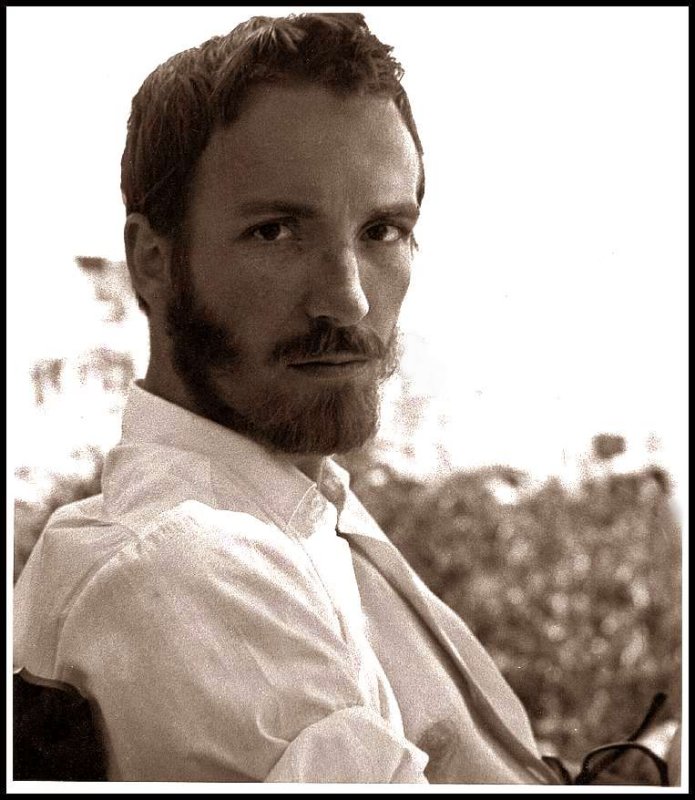
j ulbricht auto-retratoJohn Ulbricht Self-portrait

Chapter 37

During these first months in Mallorca the weekends were eagerly anticipated because it was then that Mr. G., Helen and I went out exploring the island or visiting.
Mr. G. was acquainted with many of the English-speaking foreign residents, some whom he had met through his mother,
Dina Moore Bowden, a patron of the arts who was born into a wealthy American family.

At that time there were several known American artists and writers who had chosen Mallorca as their permanent home. Mr. G. was eager to introduce them to me, and at times we would appear without warning on the steps of an artist's studio home in a quiet village up in the Mallorcan hills. Not everyone had telephones in those days because it took years of waiting to have one installed. And many painters or writers had little desire to be in touch by telephone with the outside world, as they had left that convenience behind in their search for a simpler life style. A once a week trip down to the village often sufficed to replenish the pantry, catch up on local news or pick up the mail. But on occasion, we would receive a word of mouth invitation to visit someone.

I remember one such outing to the village of Galilea where we were invited to the studio home of John Ulbricht and his wife Angela von Neumann, both of whom were painters.

john ulbricht
John Ulbricht
was born in Cuba in 1926, and moved to America when he was six years of age. He studied in the Chicago Art Institute where he met his future wife, Angela Von Neumann, also a painter. After living in America and touring Europe they discovered Mallorca and decided to settle there in the village of Galilea in 1954.

Angela von Neumann
Angela von Neumann was the daughter of Robert von Neumann, 1888 - 1976, a prolific painter who came to Wisconsin from Germany and taught art in Chicago for most of his life. Angela painted nature and animals in a naif or bright folk art style. She exhibited in USA, Mexico and Barcelona, and was awarded the Ramón Llull award of merit in 1998.

crocodile Crocodile by Angela von Neumann

I remember her as an attractive dark-haired woman who in our brief meeting impressed me with her style and grace.

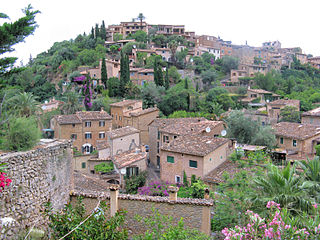
Galilea is a charming small village in the mountains of Mallorca. about 20 kms from Palma. Houses centre around the church square where a nearby bar and restaurant serves as a meeting place for neighbours and visitors.

Galilea
My memories of the visit we had with John and his wife are a little vague now but I do remember entering a large, bright studio and seeing paintings stacked around the walls.

John painted large dimension head portraits in his style of pointillism, if I can call it that. His palette of soft earth tones, impressed me deeply, as did his ability to capture a likeness. He painted royals, and famous faces as well as friends on enormous canvases. I don't forget seeing his near wall-size canvas of the American writer, Anthony Bonner in the Bonner home, the first time I stepped inside with Mr. G.

Mountbatten Earl Mountbatten of Burma by John Ulbricht


Betty FordBetty Ford by John Ulbricht


He also painted larger than life elements of nature, fruits, vegetables and landscapes of Mallorca. Here are some examples:

Mallorcan landscape Mallorcan Landscape

Bancales con Olivos Bancales con Olivos

And here is his painting of his wife, "Angela in Nine Fragments":

Angela in 8 fragments
Another interesting visit will be coming soon.

All photos were taken from the internet. Thanks and credits to the following:

galeriagabrielvanrell.com
mallorcaweb.com
National Portrait Gallery (npg.org.uk) Portrait of Mountbatten
pintura.aut.org
Lletres.net
fototeca.cat

Wednesday, June 24, 2009

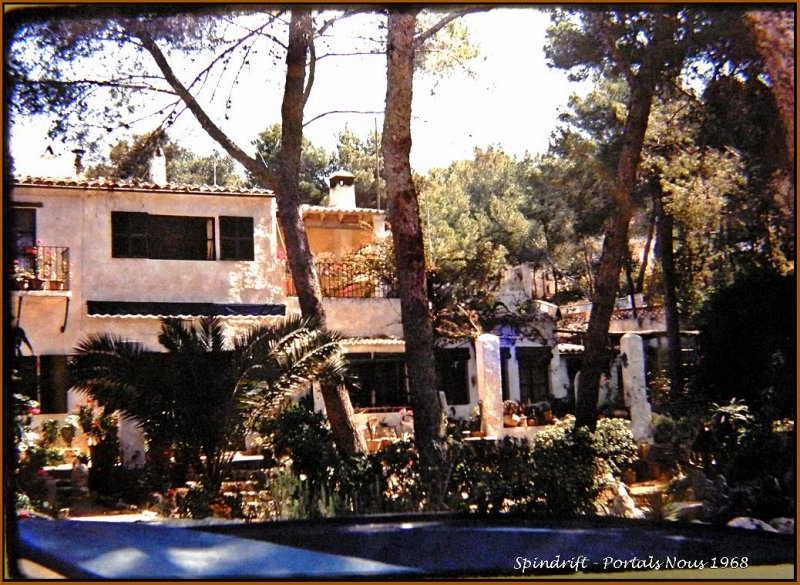
The House at Spindrift

the house at spindrft The main house - (Click to enlarge photos)

Chapter 29

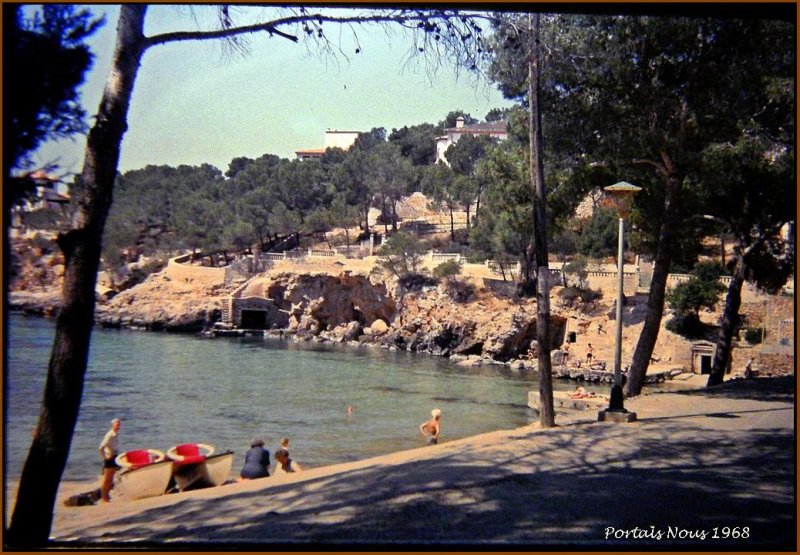
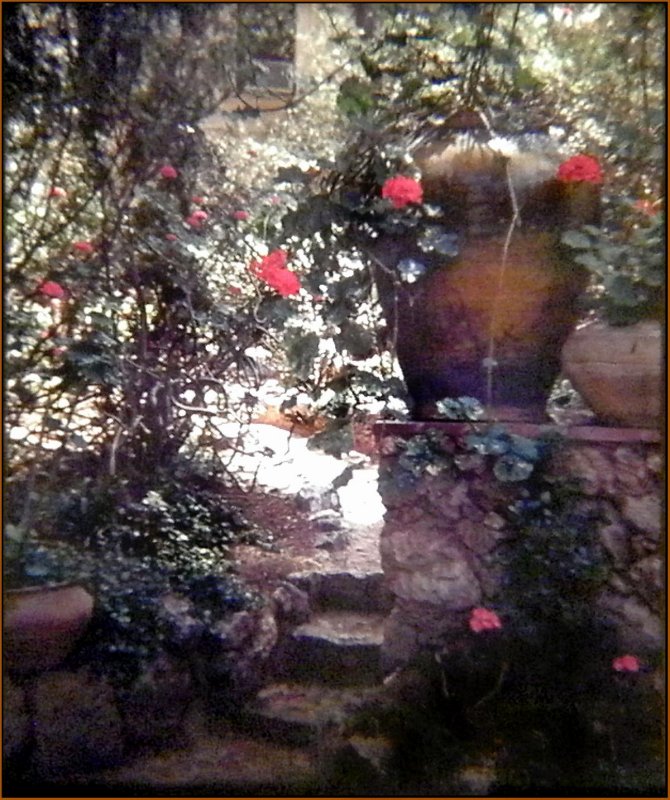
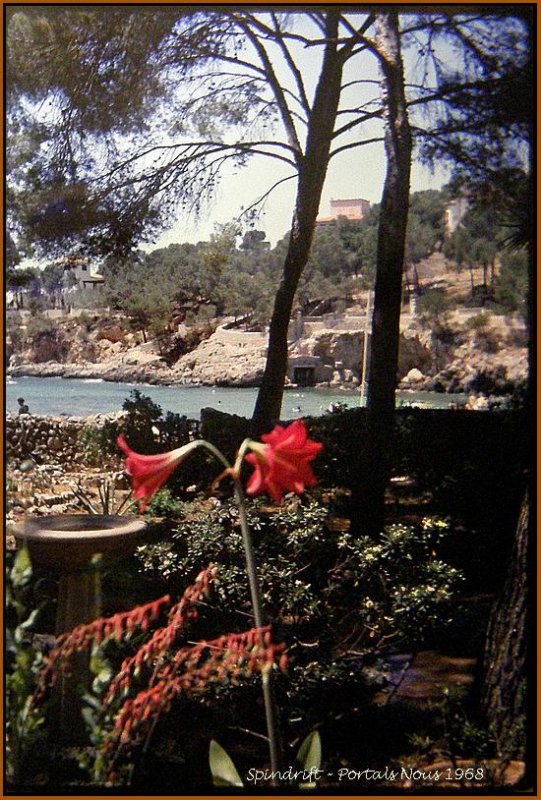
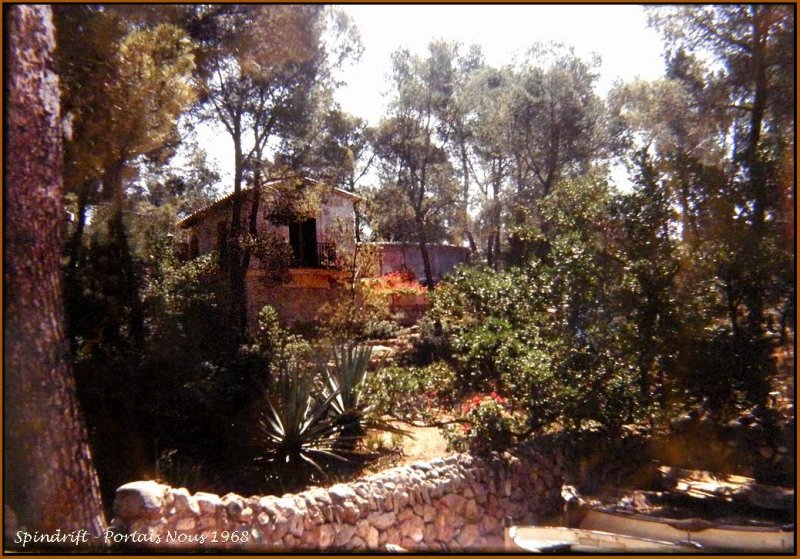
I was so pleased last night when I discovered some coloured slides I had taken in 1968 of the Spindrift estate to complement my black and white photos. For me it was like finding a small treasure in these few transparencies. Unfortunately I don't yet have a slide scanner for uploading them to my computer but for the time being these images will suffice, even though they were reproduced in a low tech manner by using a strong light and a close camera on macro. The above photo shows the main house located at the back of the property at Portals Nous.

portals beach 1968 The Beach at Portals Nous 1968

My story of Dina Moore and the Bowdens will continue after showing these photos of their beautiful old Mediterranean house and garden.

Ajoining the outer street wall by the entrance was the small house of the Mallorquin couple Catalina and Juan who were the estate caretakers. Catalina cooked and looked after the house while Juan tended the garden and did repairs.

I remember the kitchen of the main house being fitted with old-style double stone sinks with tiny drainholes, used in the manner which I still use today for dishwashing...left side filled with hot, soapy water for washing, right side filled with cold water for rinsing. It was an interesting house although I didn't see all the inside rooms.

flowerpotThe large dining room table was frequently covered with books, newspapers and cuttings which Dina Moore was preparing to save or send to friends who could be interested in news items she had found. I often received envelopes of clippings from her with handwritten notes on her stationery adorned with the image of the Spindrift seahorse informing me of some upcoming musical event in Palma, or a writeup about The Guitar Centre or the Juventudes Musicales, an organization dedicated to furthering young peoples' interest in music.

Here is again the photo print of me in that yellow dress I made before leaving Vancouver. I realized later that this was taken in the garden at Spindrift, not in Palma as I had previously thought. Part of the house is visible behind.

sharon at spindriftHere is a view across the small cove as seen while standing in the garden.

garden at spindrift In the centre of the garden, up a narrow winding path was a small one room stone cottage built in the Mediterranean style, with tiled roof and windows looking over the garden and sea.

cottage at spindrift The Cottage Studio

It was fitted out as a small library with books, a table and comfortable sofa. Dina Moore Bowden kindly invited me to come and spend time in this quiet studio to practice my guitar and read her books. It was a lovely retreat, where I sat alone reading for the first time George Sand's book "A Winter in Mallorca". I read it there, albeit slowly, in the original French as "Un Hiver à Majorque". The name George Sand was the pseudonym of the French novelist Amandine Aurore Lucile Dupin who spent a miserable and cold winter of 1838 - 1839 with Frédéric Chopin in the Carthusian monastery in Valldemossa.

That was the first time I had heard that it could be very chilly in Mallorca in winter time. I had brought no coat with me from Canada, thinking Spain was the land of sunshine, every day of the year!

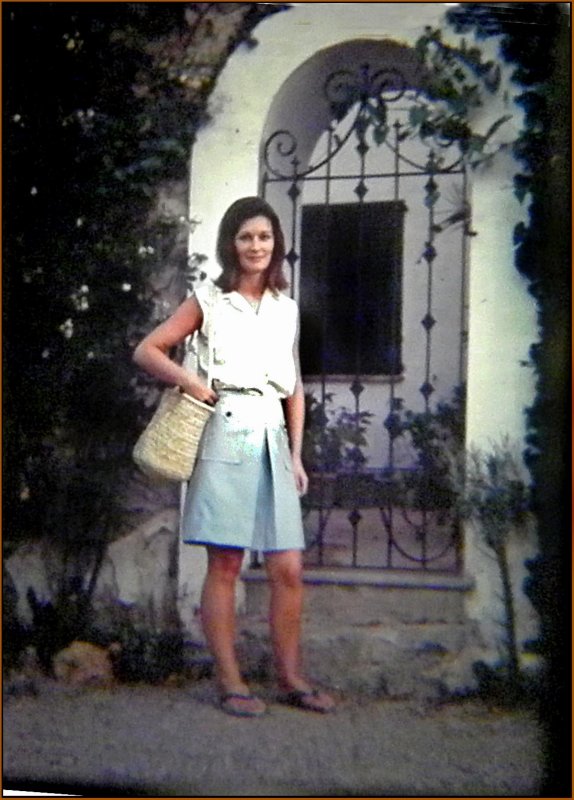
Here I am by the gate, wearing again my straw basket, my one blouse and skirt.

sharon at gate Why is it that as we get older we start to carry more baggage when we travel? At least I do. As a young woman I was content to move to a strange land with one small suitcase, one blouse, two homemade dresses, almost no money and a head full of dreams. Perhaps it's having the dreams and expectations of a wonderful life ahead that makes carrying an extra pair of shoes or warm sweater seem unnecessary.

Continue on to Chapter 30 Dina Moore Bowden
Go back to Chapter 28 Spindrift

Wednesday, April 29, 2009

A Night in Tagomago

Chapter 23

club scene This is a photo collage. (click photos to enlarge)

Loli and I were still working as extras in the movie being made in Palma de Mallorca.

movie cameraOne evening we were taken to a popular nightclub called Tagomago, which was run by Los Valldemosa, a musical group at the time consisting of three young Mallorquin men, Rafael, Bernat, Tomeu and a pretty blonde American girl, Genia.

GeniaThe men were from the village of Valldemosa, a lovely place in the mountains where Chopin and his mistress, George Sand (her pen name) spent a rather chilly winter in the monastery, la cartuja, years ago. The group was popular in the Balearic Isles, had travelled and performed worldwide and had made several records for the Belter Discos company. They did a good rendition of "The Banks of The Ohio" as well as everyone's favourite, played over and over again in parties and barbecues for tourists "Na Catalina de Plaça", in which the audience joined in for the chorus of Cua - Cua- Cua.

record cover Along with Los Valldemosa, was Salomé, the singer with whom we had been performing in previous days in both the bullring and the Pueblo Español. She would also be singing for us in Tagomago.

SalomeLoli had informed me that for this shoot we would have to wear something suitable for a nightclub outing. At that time, nightclubs were very popular, since there was yet no colour television to keep people sitting at home. It was customary to go out to the open bars and patio cafes, to drink coffee and liqueurs while watching people go by. Otherwise one went to a dance hall or on special occasions, to a nightclub which at that time were were quite civilized. Guests sat at tables, usually with a drink, while watching the show and applauding the artists. During intermission, they danced to recorded music in a small centre dance floor.

So after I borrowed a dress to wear, we arrived at Tagomago and were ushered to our seats near the stage and given a soft drink, made to look like a cocktail with a pretty straw and cherry.
There were few choices in soft drinks in those years.

Tri-NaranjusThere was Coca-Cola and Tri-Naranjus and that was about all. One didn't ask for a 'Coke' because that was an expression unknown over here. One requested it by the full name...'Coca-Cola' and it came in a very small bottle. The other drink available was Tri-Naranjus, which was a watery, non-carbonated orange drink, which after I'd tried it for a few months, became quite palatable to my taste.

tri-na Those who lived there at the time will remember how a large bottle of Tri-Na was always included in our straw baskets for a trip to the beach.

Anyway, we had a good evening at Tagomago, sipping orange, applauding, smiling and listening to Salomé and Los Valldemosa while the cameras rolled.

Here is a retro recording of Los Valldemosa performing in Tagomago. Unfortunately the sound is not too good, so you have to use your imagination to hear it Hi-Fi (smile).


Continue on to Chapter 24......Cayetano, The Gypsy

Go back to Chapter 22......Making The Movie

Tuesday, March 31, 2009

Mallorcan Countryside

Chapter 20

sheep & lamp(Click photos to enlarge)

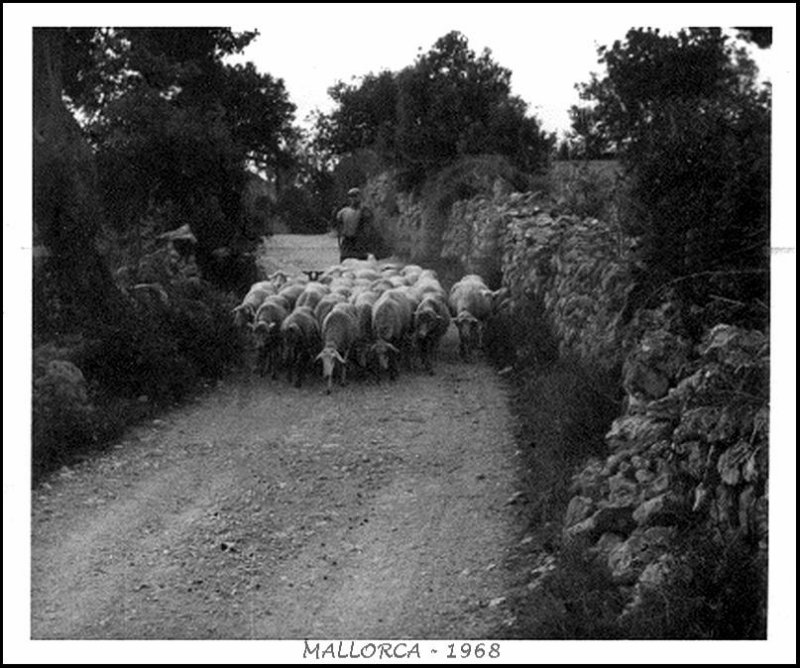
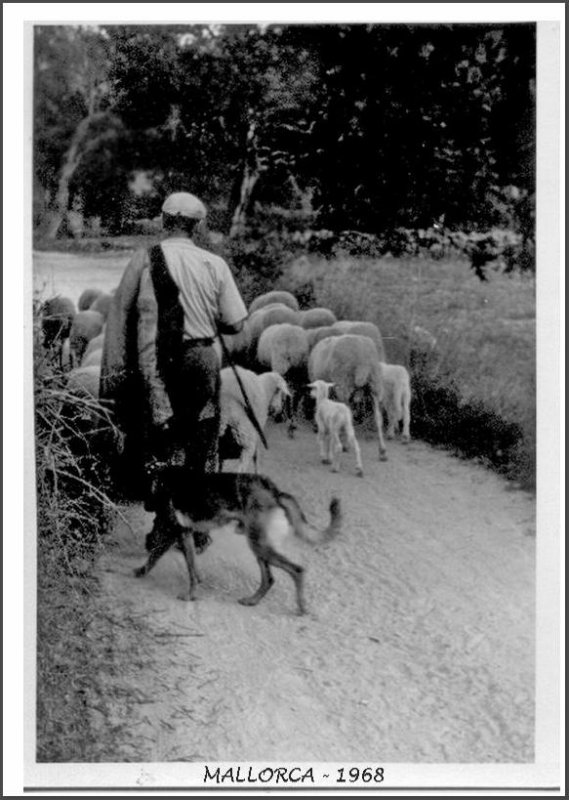
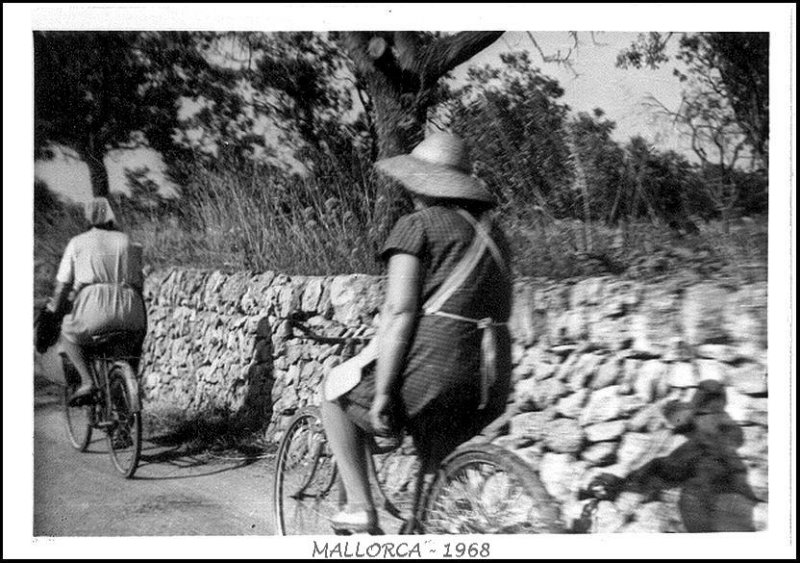
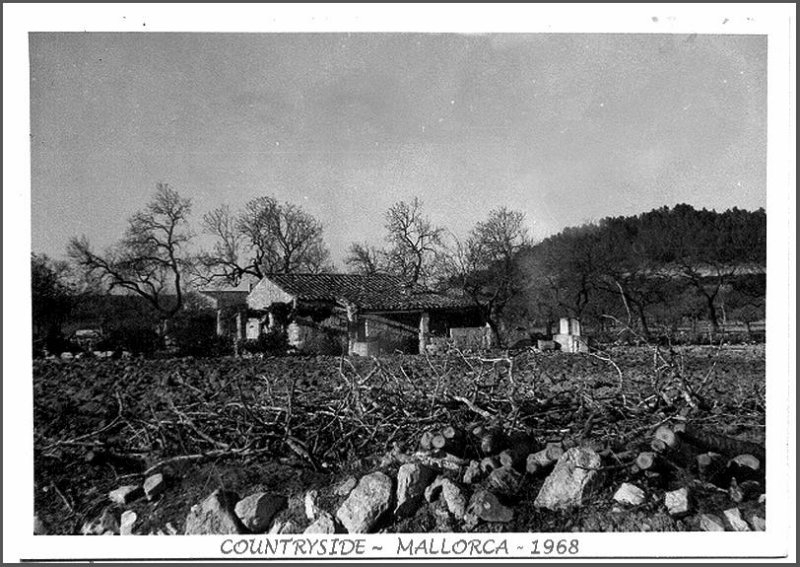
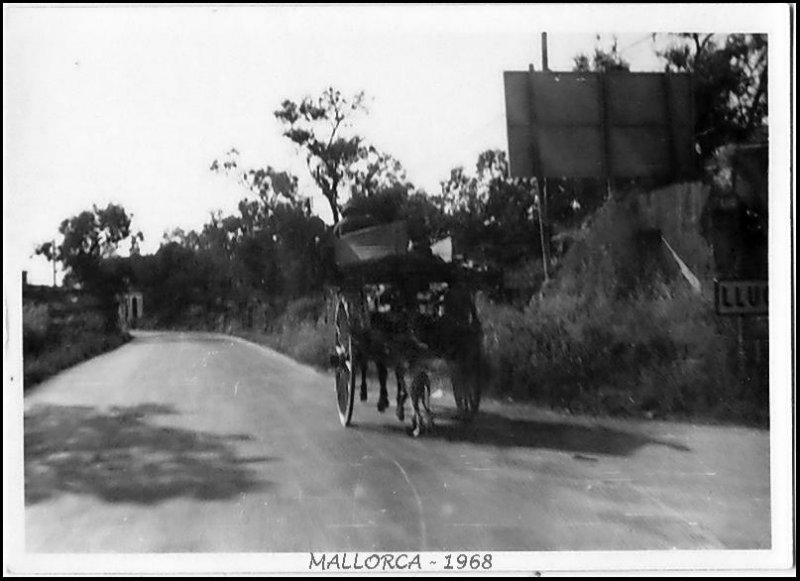
Going for a drive in the country was a favourite pastime for many in those days when country roads were quiet, save for the occasional flock of sheep, horse and cart or neighbours passing on their bicycles.

Mr. G. enjoyed a Sunday drive out into the Mallorcan countryside, where once out of Palma city one could notice the scents of olive wood smoke, freshly turned soil and wild thyme growing on hillsides.

shapherdWe would go with Helen in the Citroen deux cheveaux to join the domingueros or Sunday drivers as they exited the city to take in the warm Mallorcan sunshine by perching on a hillside under a pine tree, or by spending the day on a beach with a picnic basket. Some families would scout the woods for wild asparagus after a spring rain. Others could be seen unloading a carload of equipment for not just a simple picnic, but a full cooked meal in the woods, with camp stove or bonfire, tables, chairs and cooking pots brought for boiling the Sunday dinner al fresco.

shepherd leaving Mallorca was an island full of stones. Stone walls, stone castles, stone fences and fincas, or country estates were constructed from native stone.

women on bikes
countryside gI had been accustomed to the rainforest greenery of Vancouver Island and so this Mediterranean island was a sharp environmental change. Pine trees lined mountain ridges, their rounded crowns like soft green puffs painted on a gentle landscape.


Photo of Deià by Adrian Pingstone


I felt sorry for the poor dogs tied to the back of horse-drawn carts who were expected to keep walking even when tired.

cart and dog

Continue on to Chapter 21......Loli

Go back to Chapter 19......Eurovision 1968

Wednesday, December 10, 2008

Son Armadams & The Colmado

Chapter 5

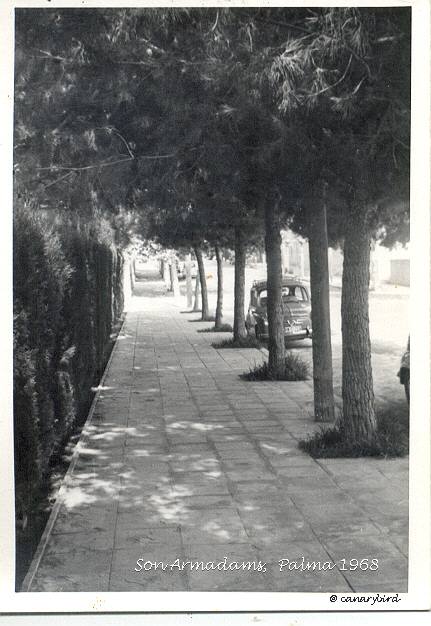
I had been invited to stay with Mr. G. and his daughter Helen until I was settled in my new environment. They lived in an apartment in the Calle Don Álvaro de Bazán, in the residential area of Son Armadams where there were tree lined streets and a view of nearby Bellver Castle, and not too far a walk up to El Terreno. El Terreno was formerly an out of town country area where wealthy families kept their weekend residences. But the city built up around it and what was formerly a zone of restful retreat became a popular centre for night life.


After unpacking I fell into bed for a very long sleep.

Next morning Helen took me for a walk to the neighbourhood corner store, near the Calle Andrea Doria where local women were congregating to do their morning shopping. These small grocery stores, called colmados, were usually run by the owners who served their customers one at a time. As the women had to stand in line waiting their turn, they inevitably started chatting so the ritual of meeting in the colmado was a pleasant start to a day for many. Several women were wearing what appeared to be quilted ankle-length housecoats, something that struck me as out of place while in the street or shopping. When I asked Helen she explained that the women often wore these housecoats over their clothes on chilly mornings when stepping outside for a brief trip to a nearby shop.


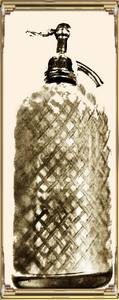
I noticed some people were carrying large mesh-covered bottles with a pressure spout. These were the bottles of sifón or soda water which I would see often from then on. They were a common sight on most dinner tables, as soda was used to dilute wine and as a drink for children when mixed with fruit juice or even a splash of wine. It was also a popular instant spot remover for spilled food stains at the table. It was not uncommon to see someone hastily take a white cloth napkin, give it a squirt of sifón and then rub a spot on their clothing. The empty bottles could be exchanged for full ones at a cost of only a few pesetas. I seem to remember seeing these bottles on restaurant tables in old Life magazine photographs of the European rich and famous.


At another corner of the colmado I could see large bottles of cologne used to refill al granel small plastic spray bottles which one could also bring from home.
Several favourites of that era were Lavanda Puig, Clair Matin, Denenes. These were the fresh scents of Spanish schoolchildren I was to learn. I soon noticed that mothers would splash their children with one of these fragrances, and comb it into their sons' hair before sending them out the door to kindergarten or school. Those fresh citrus and lavender scents were to become part of my favourite memories of those early years in Spain. Who could forget how a laughing group of small children rushing to school invariably left behind them trailing wafts of lemons, lavender and orange blossoms.


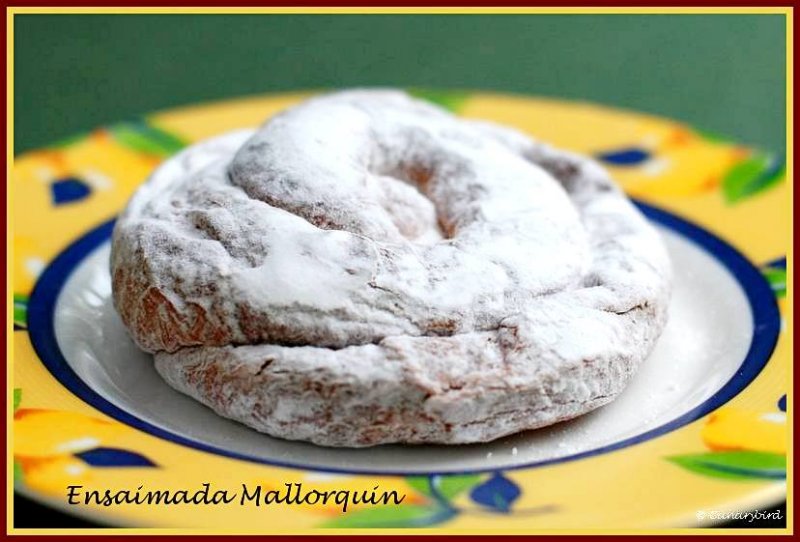
Another refilled item was the wine bottle. For two pesetas we could exchange an empty bottle of red table wine for a full one. Here also were the long crusty barras of bread, similar to the French baguette, which were included in morning shopping. Helen chose a couple of round powdery spiral pastries and told me I was in for a breakfast treat when we got back to the apartment. I was to be introduced to the Mallorcan ensaimada...the star of Mallorcan pastries which, so I'm told, has never been equaled when made in any other location...not even in the other Balearic Islands. They say it's the air and water of Mallorca which contributes to its success. But I know that from then on I was a devotee of this buttery, powdery and light as air breakfast delicacy which, together with a cafe con leche, made a perfect start to any day.

Continue on to Chapter 6......The Ensaimada

Go back to Chapter 4......Plaza de la Reina

Saturday, December 6, 2008

Plaza de la Reina

Chapter 4

The Bar Reina was situated in Plaza de la Reina and faced a large roundabout with a central fountain and the magnificent Palacio de la Almudaina, a former Arab citadel built over Roman ruins in 1281, which was later used as the summer residence of King Jaime II, and in present days as a museum and venue for state events. The outdoor seating of the cafe bar consisted of several small round tables and metal chairs perched on the sidewalk against the exterior wall of the building. There was not much room for pedestrians to pass but it seemed as though they took this for granted, maneuvering their way quite naturally past pavement obstacles.


The plaza bustled with streams of heavy green buses which spewed black exhaust fumes while heaving their way to the bus stops lining the plaza. Some of them sported the word Campari painted in bright letters along their sides, while the front panels indicated strange names such as C'an Pastilla, Illetas and El Arenal. It was all so totally foreign and exciting for me. Even the people looked quite different. I had never seen such a colourful mixture of faces and races bustling together. Dark Mediterrean skins and black hair contrasted with pale nordic blondes who were part of the newly arriving groups of tourists from Northern Europe. To the left was a long and beautiful promenade shaded by giant plane trees, the Paseo del Borne, bordered on either side by narrow lanes of traffic.


Mr. G. explained that after dining it was customary to have either a small black espresso coffee un cafe solo or the same with a dash of hot milk, un cafe cortado (cortado meaning cut). I agreed to have the cafe cortado which was his choice. As were many people at the time, I was a smoker and had come equipped with a carton of my Canadian Craven A cigarettes. Mr. G. also shared the habit and pulled from his pocket a green and white package of Spanish cigarettes. He suggested I try one of his, which was made from the black tobacco grown in the Canary Islands. The brand was Record and they cost only about 4 pesetas for a package of twenty. I lit one and immediately was able to identify that unusual acrid scent I had noticed permeating the airport and streets of Palma. It was the scent of black tobacco, the same smell as the French cigarettes, Gauloise, which I had noticed at times in Canada when French Canadians had been smoking them.

The coffee arrived, served by our waiter who was typically dressed in black trousers, and a neatly ironed white shirt. He carried a small white towel over his arm as he served the two small coffees from a round metal tray. This was the traditional garb of the Spanish waiter. It was meticulously fresh and smart looking and was so in even the most modest cafe bars. As I inhaled the strong scent of the fresh coffee I looked down at my tiny cup and was surprised to see it was made of glass and had no handle. And there was sugar in the form of a long rectangular cube wrapped in paper. How to pick up the glass? I observed Mr. G. as he showed me the way to gingerly pick up the tiny cup with thumb and index finger while using the little finger to brace the underside of the cup. A sip from the cup and then back down to the saucer. This had to be done quickly before the burning sensation was felt in the fingers. A quick shake of the hand to indicate that the glass was really hot and then another inhalation of strong black tobacco. So this was Palma. And I was fascinated!

Continue on to Chapter 5......Son Armadams & The Colmado

Go back to Chapter 3......The Viking

Tuesday, December 2, 2008

The Viking

Chapter 3

The Viking restaurant was a very small establishment in the Calle de los Apuntadores. After walking a short distance in the bright Mallorcan sun Mr. G. and I entered a narrow doorway and stepped down into cool darkness. To the right was a small curved bar which stopped at the kitchen door and to the left a long seat built against a wall which accommodated several tables. The place was packed with what I could make out were mainly English-speaking patrons.

In the centre of the long seat sat Helen, Mr.G.'s daughter, who quickly moved over to make room for me beside her. Although I had not met her before, she made me feel quite welcome. She and I had at one time lived in the same part of the world so we began to chat with ease. She asked about my trip and my first impressions of Mallorca. So far it was all wonderful. How could it be otherwise...I'd had my first plane ride and had just landed in Europe.

When the menus arrived I opened mine to see an appetizing assortment of British food prepared by Anne, the owner. She was known for her roast beef and salad platter, as well as her curries, trifles and chicken supreme among other dishes. Although my appetite was still on Vancouver time and I didn't feel very hungry, I chose the chicken supreme. It was wonderful. A chicken breast perched on a bed of mashed potatoes, covered with cream and fresh mushrooms, sprinkled with finely chopped parsley. The sauce was rich and contained cognac and chicken broth as well as cream.

This is my representation of the dish, although not as nice looking as Anne's which was served on a wide white plate adorned with small blue flowers around the edge.

As we sat talking I couldn't get over the strange new sensation of jet lag. Here it was the middle of the day, and I felt partially bright and awake but with flashes of weariness that didn't seem to fit the hour.


Mr. G. said it was often the custom there to have after dinner coffee in a coffee bar rather than in the restaurant where one had just dined. So we left The Viking and climbed the few stairs back up into the Calle de los Apuntadores, where I became aware of strange and unfamiliar smells. The air seemed to be heavy with a strong cooking odour which I later learned was that of food frying in olive oil. It combined with the scent of black tobacco, another new fragrance that was pungent and not altogether unpleasant. Then we were back in Plaza de la Reina, a crowded intersection filled with exhaust fumes, people of many races, bright colours and new sounds. We were heading for the Bar Reina.


Continue on to Chapter 4......Plaza de la Reina

Go back to Chapter 2......Palma de Mallorca

Sunday, November 23, 2008

Memories of Mallorca ~ The Arrival

Chapter 1

As I stepped off the plane in Palma de Mallorca the sun was blinding and the air was hot . My tired eyes had never seen such intense sunlight and although I'd had no sleep for well over twenty-four hours my excitement at not only being on an airplane for the first time but also arriving in Europe kept me in a state of nervous anticipation.

The year was 1968 and Spain was a sleepy old country which seemed to have forgotten it was in the twentieth century. General Francisco Franco was the head of state and mass tourism into the country had only recently begun. A liter of wine could be bought for just two pesetas, which was then the national currency, and a long baguette or barra of bread cost only a few centimos which were small thin coins made of aluminum.

I had come to Mallorca at the invitation of Canadian friends whose relatives had been established there since before the Spanish civil war. Needing a change in my life at that moment, I had accepted an offer to leave Vancouver and teach classical guitar at a music centre in Palma. It seemed to be an intervention of destiny that the position was open just at a time when I had been dreaming of being able to study with a Spanish maestro of classical guitar, but never could I have imagined that this might have become a reality.

photo from the Mallorca Daily Bulletin

Coming out into the arrival hall of the airport I clutched my one little suitcase. It was made of pink striped plastic and must have been a bargain basement purchase. It contained several cotton dresses that I'd sewn before leaving Vancouver. I'd heard that it was very hot in Spain and that cotton was the best material to wear. One dress was yellow, sleeveless and went with a yellow plastic bracelet I bought to match, and the other was a black and white printed cotton, which I made using the same pattern as the yellow one. I bought a white plastic bracelet to go with that one. I didn't have much money at all and had sold most everything I owned, even my beautiful Spanish-made guitar, to pay for my plane ticket.

Coming toward me was my good friend and guitar mentor, Mr. G. who had invited me to stay with his family. He owned a little guitar factory in Palma and had a daughter who was about to marry a Spanish man. Although she was only a couple of years younger, I was to be her chaperone over the next weeks until her wedding. It was frowned on for her to be alone with her fiancee in those days, and I was to accompany her on a trip to Barcelona to make wedding arrangements with his parents.

Mr. G. greeted me like the old friend he was and after asking me how I had enjoyed the trip he took my suitcase and guided me out of the arrivals hall once again into that bright sunlight that tingled the skin on my arms and reminded me that I was going to be experiencing many other new sensations in the next weeks.

We piled into Mr. G's car, which was a Citroën deux chevaux, a vehicle with just two horsepower and a gearshift on the dashboard which had to be pushed in and pulled out in order to change gears. The car looked as though it were made of tin, the engine whirred like a lawnmower and the soft suspension gave one the feeling of riding in a large baby pram. And so we rocked and bounced our way out of the airport and down the highway on our way to Palma city.
Palma de Mallorca - The Borne

Continue on to Chapter 2.......Palma de Mallorca
Related Posts with Thumbnails